
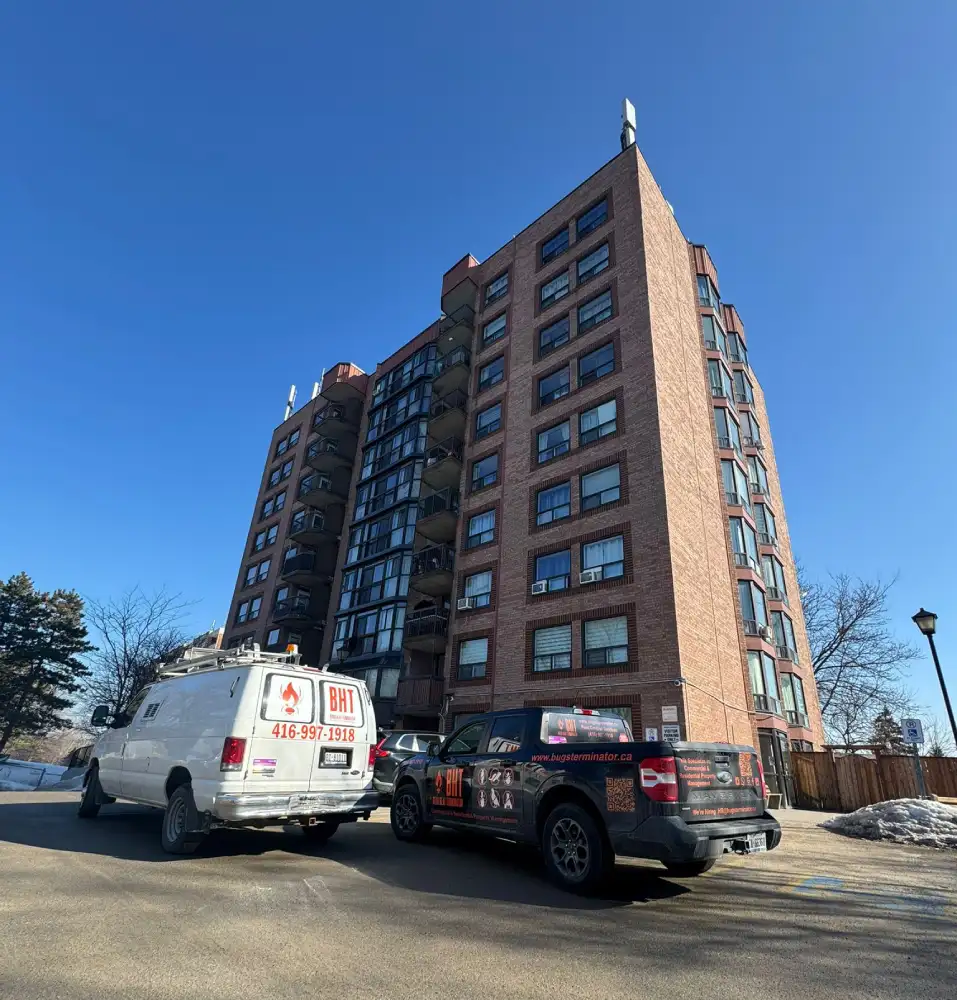
Living in a multi-unit building along Islington Avenue in Etobicoke comes with a lot of advantages — proximity to transit, access to the Finch West corridor, and the close-knit community feel that has defined the Thistletown and Rexdale area for decades. But shared walls, common hallways, and interconnected plumbing also create one specific vulnerability that too many condo and co-op residents in this part of the city discover the hard way: bed bugs can travel between units far more easily than most people expect.
This guide explains how bed bug infestations develop in multi-unit buildings like those along Islington Ave near Finch Avenue West, why they are harder to eliminate in this type of housing, and why our professional bed bug heat treatment remains the most effective and disruption-free solution available today.
Why Condo and Co-op Buildings in Etobicoke Are Particularly Vulnerable
Bed bugs do not discriminate by income, cleanliness, or neighbourhood. A building’s structure, however, does influence how quickly an infestation spreads. In a detached home, a bed bug problem is generally contained to a single unit until it reaches a very large population. In a multi-unit residence — whether a condo tower, co-op, or low-rise apartment — the risk of cross-unit migration is a constant factor.
In buildings along the Islington Avenue corridor between Albion Road and Finch Avenue West, many of the residential towers and co-operative housing complexes were constructed in the 1970s and 1980s. These buildings share design features that are well-known entry points for bed bug movement:
- Shared plumbing chases and pipe runs that pass between floors and units
- Baseboards and electrical conduit that connect adjacent suites
- Elevators and common hallways where bed bugs hitchhike on furniture, boxes, and luggage during moves
- Laundry rooms, where infested clothing from one unit can transfer bugs to another
The result is that a bed bug infestation in one unit of a building like 2745 Islington Ave is never truly isolated. Without swift, complete treatment, the problem can resurface even after what appears to be a successful elimination.
The Signs Residents Often Miss
One of the most common reasons bed bug infestations grow out of control in condo buildings is delayed detection. Residents may attribute the first signs to other causes — a skin irritation, a rash from laundry detergent, or bites from outdoor insects. By the time the source is correctly identified, the infestation may have been growing for weeks or months.
Key warning signs to watch for in your Etobicoke unit — and if you want a deeper breakdown, our guide on signs of bed bug infestation in Toronto covers each one in detail:
- Red or rust-colored stains on pillowcases, mattress seams, or the headboard — these are fecal marks left by feeding bed bugs
- Tiny, cream-colored eggs or shed skins tucked into mattress folds, furniture joints, or along baseboards
- Bites that appear overnight, typically in a line or cluster on the arms, neck, or legs
- A faint, sweet musty odor in the bedroom — a sign of a larger, more established colony
- Seeing the bugs themselves — flat, oval, brownish insects about the size of an apple seed, most active at night
If you have spotted any of these signs in your unit near Islington Ave and Finch, act immediately. The longer you wait, the more likely the infestation is to spread beyond your unit into neighboring suites — complicating the treatment process and potentially creating tension with your building management.
Why Chemical Treatments Are Less Effective in Shared Buildings
Conventional chemical sprays are widely used for bed bug control, but they carry a fundamental limitation that becomes especially problematic in multi-unit buildings: they cannot reach every hiding spot, and they leave eggs unaffected.
Bed bugs lay their eggs deep inside mattress seams, inside electrical outlets, behind baseboards, and within wall cavities. A pesticide spray applied to visible surfaces will kill the bugs it contacts, but it does nothing to the eggs, which hatch two to three weeks later — restarting the infestation. In a condo building, this cycle can repeat indefinitely, especially if adjacent units have not been treated simultaneously.
There is also the growing issue of pesticide resistance. Bed bug populations across North America, including in urban centres like Toronto and Etobicoke, have developed resistance to many of the chemical compounds commonly used in treatment. This is not a hypothetical risk — it is a well-documented reality that reduces the effectiveness of chemical approaches with every passing year.
For residents of buildings like the co-op community on Islington Avenue in Thistletown, these limitations make chemical-only treatment an unreliable choice, particularly when the goal is permanent elimination rather than temporary reduction. You can learn more about how conventional bed bug treatment compares to other methods on our site.
Heat Treatment: The Gold Standard for Multi-Unit Bed Bug Elimination
Thermal heat treatment solves the core problem that chemicals cannot: it eliminates every stage of bed bug life — eggs, nymphs, and adults — in a single treatment session, with no chemical residue left behind. Our bed bug heat treatment service is specifically designed to handle the complexity of multi-unit residential buildings.
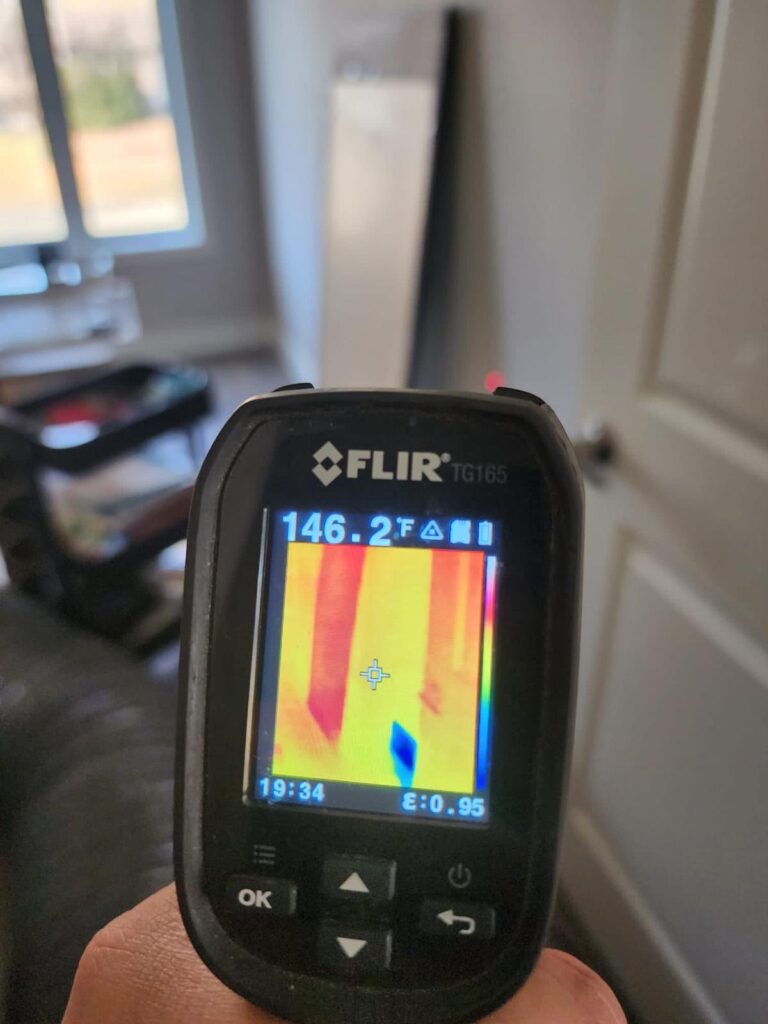
The process works by raising the interior temperature of the treated unit to between 49°C and 57°C (120°F to 135°F) and sustaining that heat for a calculated period. At these temperatures, the biology of the bed bug breaks down entirely. There is no resistance mechanism — heat kills unconditionally.
For condo and co-op residents, the specific advantages of heat treatment are significant:
Total penetration. Industrial fans circulate heated air throughout the entire unit — into mattress interiors, inside furniture, behind baseboards, and within wall cavities. There are no hiding spots heat cannot reach.
Single treatment, same-day return. Unlike multi-session chemical protocols that require repeated preparation and vacating the property, a professional heat treatment is completed in one visit, and the unit is ready for reoccupancy the same day.
No chemical exposure. Residents with children, elderly family members, or pets do not need to worry about residue on surfaces, lingering odors, or restricted re-entry times.
Discreet process. In a building with shared hallways and neighbors in close proximity, privacy matters. Heat treatment requires no exterior tenting, no visible chemical equipment setup, and no signs that draw attention to the unit.
What the Treatment Process Looks Like
When a Bugs Heat Terminator technician arrives at a unit in an Etobicoke building, the process follows a precise, professional protocol:
Step 1 — Pre-Treatment Assessment. The technician inspects the unit to identify infestation zones and evaluate how heat will move through the space, accounting for furniture layout, wall construction, and the building’s ventilation.
Step 2 — Resident Preparation. Before treatment, residents are advised to remove a short list of heat-sensitive items: aerosol cans, certain medications, candles, and items that may be damaged by sustained high temperatures. We provide a full bed bug heat treatment preparation guide so there are no surprises.
Step 3 — Equipment Setup. Industrial electric heaters and high-volume fans are positioned throughout the unit. Multiple temperature sensors are placed in the hardest-to-reach areas — inside furniture, along baseboards, and near windows — to ensure consistent heat distribution across the entire space.
Step 4 — Treatment. The unit is heated over a period of several hours, with the technician monitoring temperature readings continuously. Every area must reach and hold the target temperature for the required time.
Step 5 — Verification and Clearance. Once the treatment cycle is complete, a final inspection confirms that lethal temperatures were achieved throughout. The unit is then cleared for re-entry, typically on the same day.
The total process takes approximately 6 to 8 hours depending on unit size, floor level, and building construction.
Serving Thistletown, Rexdale, and Etobicoke’s Islington Corridor
Bugs Heat Terminator provides professional bed bug heat treatment throughout Etobicoke, including the residential buildings and co-op communities along Islington Avenue, Albion Road, Finch Avenue West, and the surrounding M9V postal area.
We understand the unique dynamics of multi-unit buildings and work with residents — and where appropriate, building management — to ensure treatment is thorough, discreet, and effective on the first visit. Our technicians are certified, our equipment is commercial-grade, and our approach is built around one goal: eliminating the infestation completely so you do not have to deal with it again.
If you are a resident of a condo, co-op, or apartment building in the Thistletown or Rexdale area of Etobicoke and you have noticed signs of bed bugs, do not delay. Visit our bed bug removal Toronto page or contact Bugs Heat Terminator today for a professional inspection and fast, same-week service.
