
Mount Dennis is one of the most talked-about neighbourhoods in Toronto right now. The opening of the new Mount Dennis Station on the Eglinton Crosstown LRT has brought renewed attention to this historically working-class community in the former City of York, drawing new residents, investors, and renters to buildings along Scarlett Road, Eglinton Avenue West, and the surrounding M6M area. With that growth comes increased residential movement — and with increased movement comes a higher risk of bed bugs.
For tenants and residents of apartment buildings along Emmett Avenue and the broader Scarlett Road corridor, understanding how bed bugs spread in rental housing and how to eliminate them effectively is more relevant today than ever. This guide covers everything you need to know, from early detection to why professional heat treatment is the most reliable solution available.
Mount Dennis: A Neighbourhood in Transition and What That Means for Pest Risk
Mount Dennis has always been a community shaped by change. From its origins as a rural farming area along the Humber River, through its industrial era anchored by the Kodak Heights plant on Eglinton Avenue, to its current transformation into a major transit hub with the Eglinton Crosstown LRT, the neighbourhood has consistently attracted new residents seeking affordable, well-located housing in Toronto’s west end.
The apartment buildings along Emmett Avenue near Scarlett Road sit at the heart of this transition. Large, established rental buildings in the area have long served families and individuals from across Toronto’s diverse immigrant and working communities. As the neighbourhood continues to attract new tenants, buildings like those on Emmett Avenue experience higher rates of turnover and move-in activity — which is precisely when bed bugs are most likely to enter a residential building.
Bed bugs travel on furniture, clothing, boxes, and luggage. Every move-in is a potential introduction point. In a building where several units may turn over in a single month, the cumulative risk adds up quickly.
How Bed Bugs Spread in Rental Apartments
One of the most important things tenants in Mount Dennis need to understand is that bed bugs are not a sign of poor housekeeping. They do not discriminate by cleanliness, income, or lifestyle. They are opportunistic travelers that exploit any pathway available between units.
In a multi-storey rental building, those pathways are everywhere:
- Shared laundry facilities where infested clothing from one unit comes into contact with other residents’ belongings
- Hallways and elevators where bugs hitchhike on moving boxes, furniture, or bags
- Plumbing chases and pipe runs that pass between floors and units inside walls
- Gaps along baseboards and electrical outlets that connect adjacent suites without any visible opening
A single infested unit can seed multiple neighbouring units within weeks if the infestation is not caught and treated quickly. In a building where the problem goes unreported — because the tenant is not sure what they are seeing, or is hesitant to raise the issue with management — the infestation grows and spreads silently.
Recognizing the Early Signs in Your Unit
Early detection is the single most effective way to keep a bed bug problem manageable. Residents of Emmett Ave and the surrounding York area should be alert to the following warning signs:
- Unexplained bites appearing overnight — typically small, red, and itchy, often in a line or cluster on the arms, neck, shoulders, or torso
- Small reddish-brown stains on bedding or the mattress — these are fecal deposits or crushed bugs, most visible near seams and corners
- Pale shed skins or tiny white eggs tucked into mattress folds, inside furniture joints, or along the baseboards near the bed
- A faint, sweet, musty odor in the sleeping area — a sign that the population has grown large enough to be detectable by smell
- Live insects — flat, oval, brownish, approximately the size of an apple seed — visible on the mattress, headboard, or nearby furniture, usually at night
If you notice any of these signs, report it to your building management promptly and arrange for a professional inspection. The earlier a treatment is scheduled, the less disruptive and more effective the process will be.
Why DIY and Chemical Treatments Often Fail in Apartment Buildings
Many residents of Mount Dennis who discover bed bugs turn first to over-the-counter sprays, powders, or steamers. While these approaches can kill some bugs on contact, they consistently fall short of full elimination — and in an apartment building, partial treatment is often worse than no treatment at all.
Here is why conventional approaches struggle in this type of housing:
Eggs are immune to most chemical treatments. Bed bug eggs are naturally resistant to many pesticide compounds. A spray that kills every adult bug in a unit still leaves behind a population of eggs that will hatch two to three weeks later, restarting the infestation from scratch.
Pesticide resistance is real. Bed bug populations in urban centres like Toronto have developed significant resistance to many of the chemical compounds used in commercial and retail products. Treatments that were effective a decade ago have markedly reduced effectiveness today.
Chemicals cannot reach every hiding spot. Bed bugs live inside mattress seams, within wall cavities, behind baseboards, and deep inside furniture. A spray applied to visible surfaces does not penetrate these areas. The bugs simply retreat deeper and return once the product dissipates.
Repeated visits are disruptive. Conventional chemical protocols typically require two or more treatment sessions spaced weeks apart, with full unit preparation and vacating required each time. For working families in a busy rental building, that disruption compounds quickly.
For residents of Emmett Ave in the Mount Dennis area, these limitations make it clear why professional heat treatment has become the preferred solution for permanent, single-visit bed bug elimination.
How Professional Heat Treatment Works
Bed bug heat treatment eliminates infestations by raising the temperature inside the treated unit to between 49°C and 57°C (120°F to 135°F) and sustaining that heat throughout the entire space for a precisely calculated period. At these temperatures, the biology of the bed bug fails completely — at every stage of its life cycle, from newly laid eggs to fully developed adults.
Heat kills unconditionally. There is no resistance mechanism that bed bugs can develop against thermal treatment, making it reliably effective regardless of how long or how severe the infestation has been.
The key advantages of heat treatment for apartment residents are straightforward:
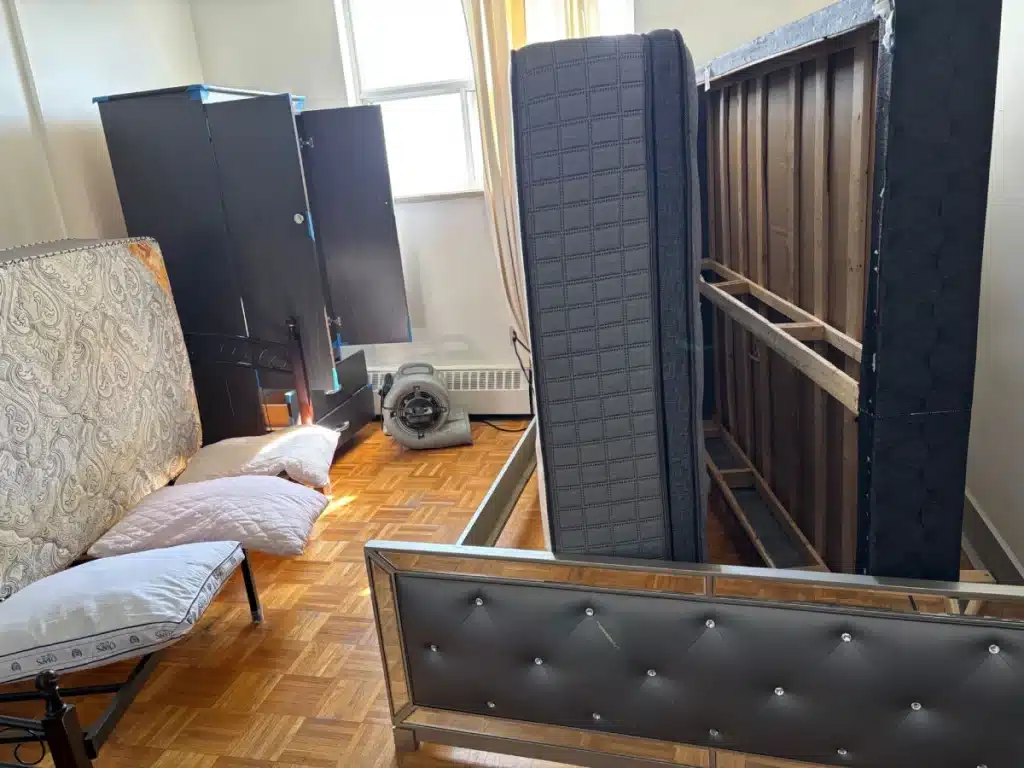
Complete penetration. Industrial heating equipment and high-volume circulation fans distribute heat throughout the entire unit — inside mattresses, within furniture, behind baseboards, and into wall cavities. No hiding spot is left untreated.
Single visit. The entire treatment is completed in one session of approximately 6 to 8 hours. There is no need for repeat visits, no multi-week treatment schedule, and no repeated disruption to daily life.
Chemical-free. The process uses heat alone. There are no residues left on surfaces, no lingering odors, and no re-entry restrictions. The unit is ready for reoccupancy the same day treatment is completed.
Discreet. Treatment is conducted entirely inside the unit with no exterior equipment or visible signage — an important consideration for tenants who value their privacy in a shared building.
What to Expect on Treatment Day
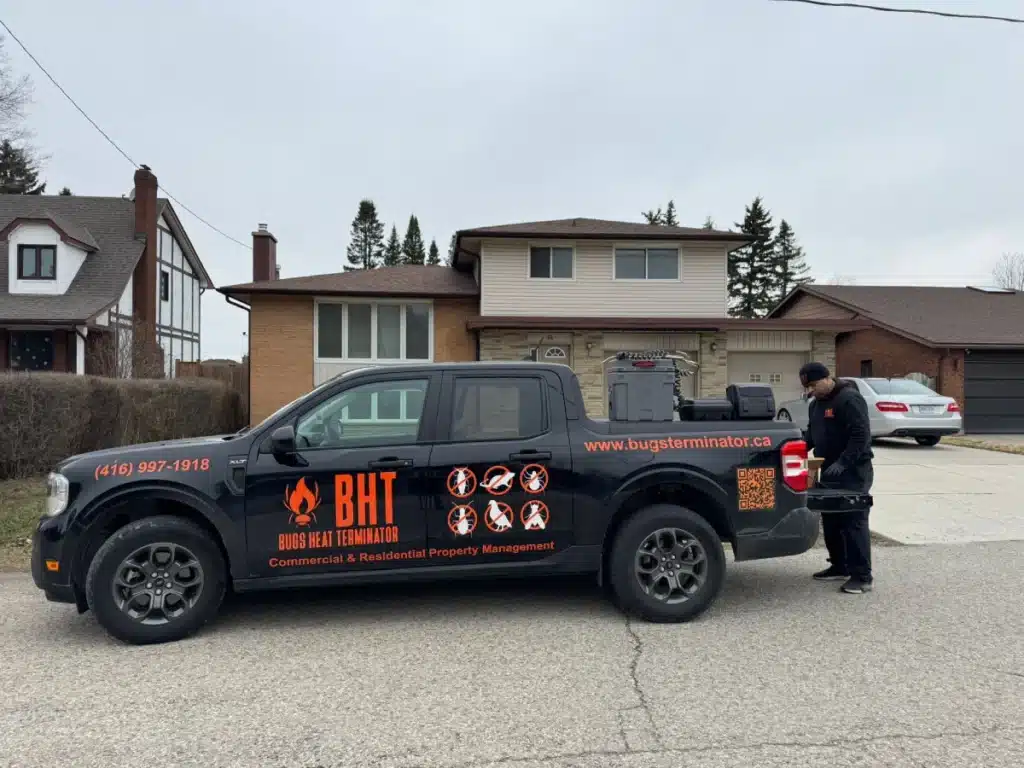
When a Bugs Heat Terminator technician arrives at your unit in Mount Dennis or the broader York area, the process follows a clear, professional protocol from start to finish.
Before the appointment, tenants receive a preparation checklist covering items that need to be removed or secured — including aerosol cans, certain medications, candles, and any items sensitive to sustained heat. This preparation takes most residents only an hour or two and is designed to be straightforward.
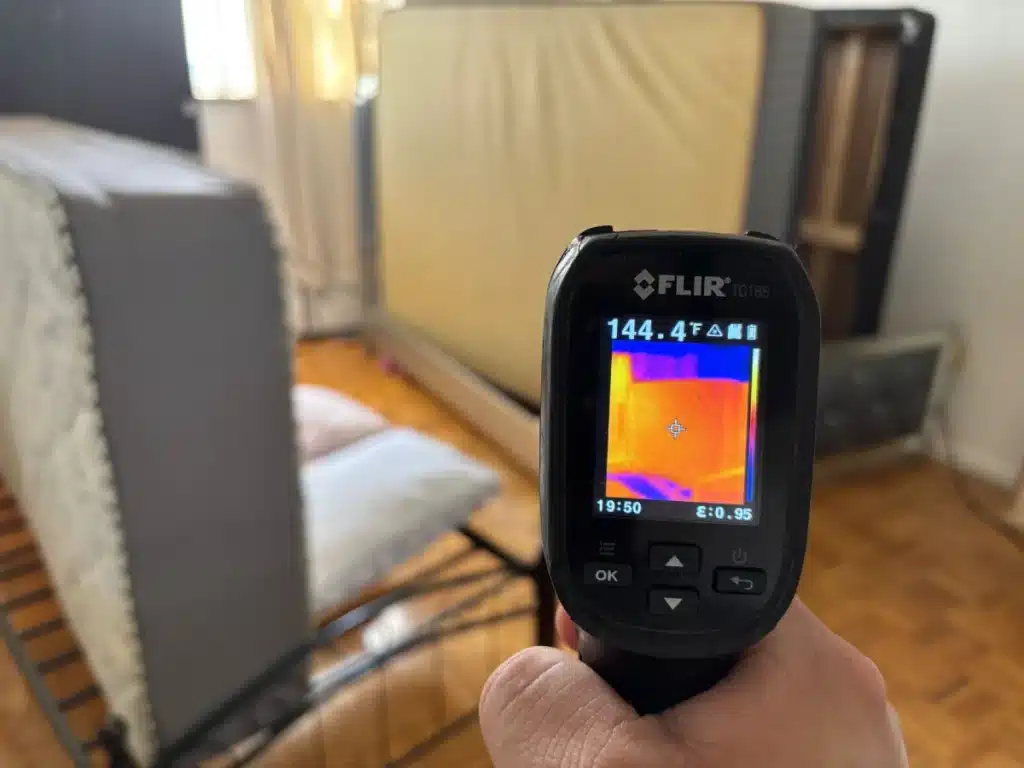
On treatment day, industrial heaters and fans are set up throughout the unit. Temperature sensors are placed in the hardest-to-reach areas — inside furniture, near exterior walls, and along baseboards — to monitor conditions in real time. The technician remains on site throughout the session, continuously verifying that every part of the unit reaches and holds the target temperature.
Once the treatment cycle is complete, a final inspection confirms full coverage. The unit is then cleared for immediate reoccupancy.
For tenants who need assistance coordinating with building management, our team at Bugs Heat Terminator is experienced in working within the operational requirements of large residential buildings throughout Toronto and can help facilitate the process.
Serving Emmett Ave, Mount Dennis, and the York Area
Bugs Heat Terminator provides professional bed bug removal for tenants, landlords, and property managers across York and Toronto, including buildings along Emmett Avenue, Scarlett Road, Eglinton Avenue West, Weston Road, and the surrounding M6M postal area.
Mount Dennis is a neighbourhood on the rise, and its residents deserve pest control that matches the pace of that growth — fast, effective, and professional. Whether you are a tenant dealing with a confirmed infestation or a building manager looking for a dependable partner, Bugs Heat Terminator delivers results on the first visit.
Contact us today for a professional inspection and same-week service in Mount Dennis and across the former City of York.
