
Discovering bites or spotting a suspicious insect can make any Toronto homeowner feel anxious. With so many pests active across the GTA, it is easy to mistake one insect for another. Bed bugs, however, require quick action, which is why proper identification is essential.
At Bugs Heat Terminator, we help residents confirm whether they are dealing with bed bugs and provide reliable treatment options throughout Toronto.
What Are Bed Bugs?
Bed bugs are small, wingless insects that feed on human blood, usually at night while people sleep. They do not fly or jump, but they crawl quickly across floors, walls and furniture, and they are experts at hiding in narrow cracks close to where people rest.
The bed bug life cycle
A bed bug goes through five nymph stages before becoming an adult, and it needs a blood meal to move from one stage to the next. Under normal indoor temperatures, the full cycle from egg to adult can take around five to six weeks, and adult females lay eggs throughout their lives. This is why a few bed bugs brought home from a trip can become a full infestation within a couple of months.
What Bed Bugs Look Like
Before you assume the worst, take a close look at the insect. Real bed bugs:
-
They are flat and oval-shaped
-
Measure about the size of an apple seed
-
Have no wings
-
Move slowly
-
They are reddish brown when adults
-
Appear pale yellow when young
If the insect you found is shiny, round, winged or extremely fast-moving, it likely is not a bed bug. Many Toronto residents confuse them with carpet beetles or booklice.
Where Bed Bugs Hide in Toronto Homes
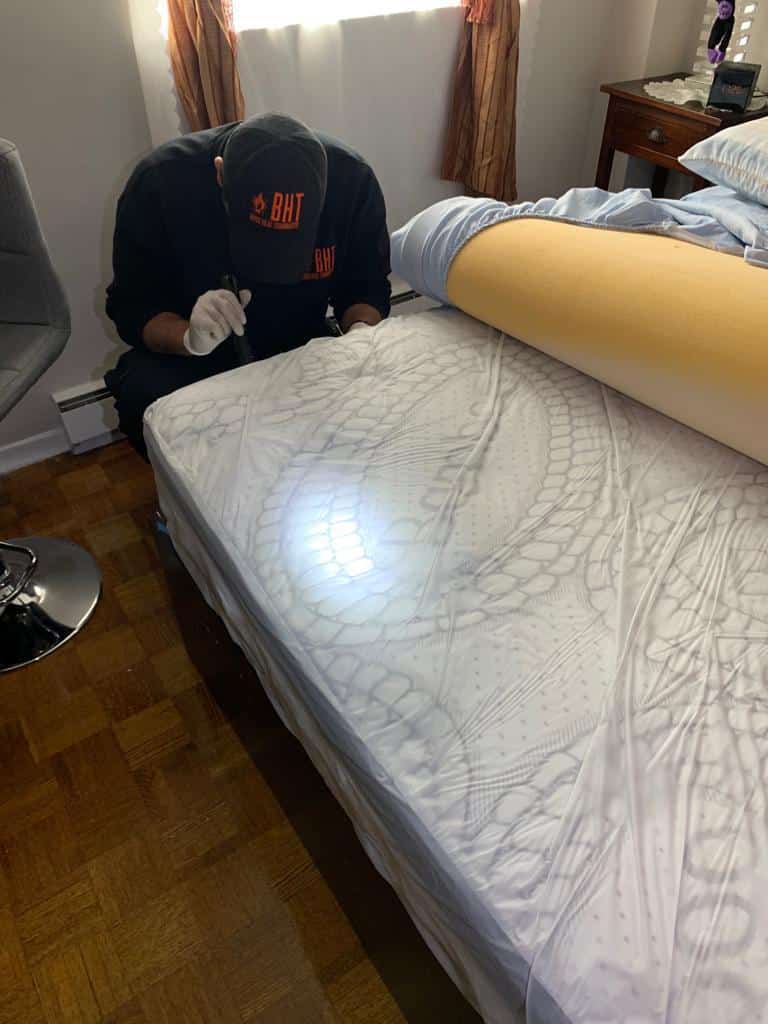
Bed bugs stay close to where people rest, making bedrooms the first room you should inspect. Focus on the following areas:
- Mattress and Box Spring. They hide in seams, piping, stitching and under fabric labels.
- Bed Frame and Headboard. Wooden frames with cracks offer ideal shelter. Upholstered headboards are frequent hotspots.
- Nearby Furniture. Check the edges of recliners, sofas, nightstands, and dressers.
- Walls and Decor. Bed bugs can slip behind baseboards, picture frames and outlet covers.
Older properties in areas like The Annex, East York and High Park often have more crevices, making inspections even more important.
For a look at how professionals search for these hiding spots, read our breakdown of the bed bug extermination process in Toronto, which explains the inspection steps during treatment.
Signs That Suggest You Might Have Bed Bugs
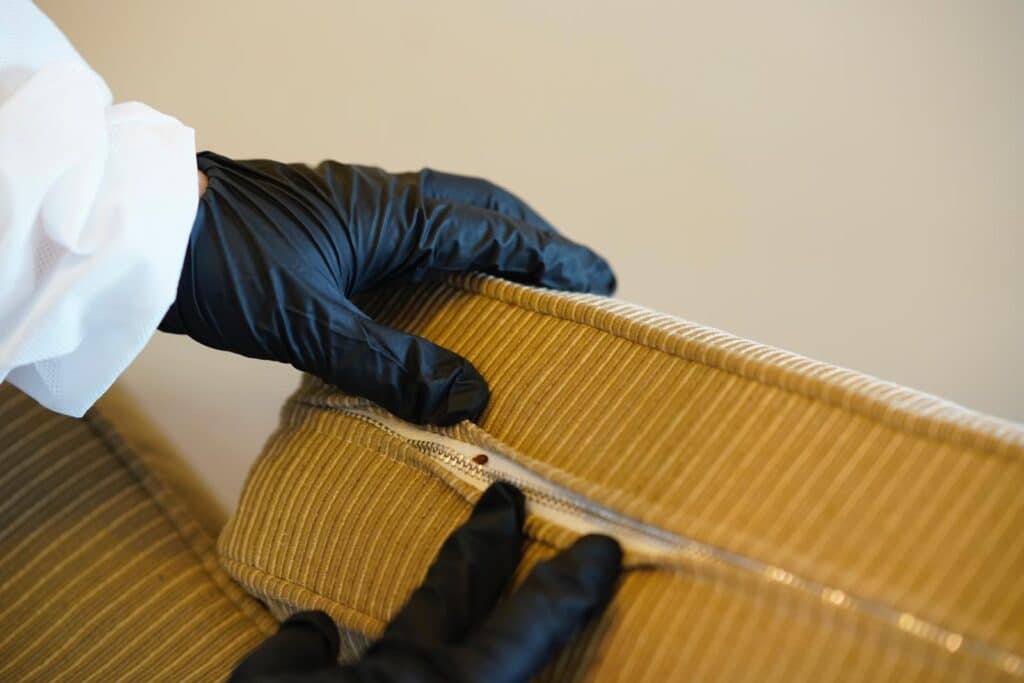
Even when bugs are not visible, other clues may confirm an infestation. Look for:
-
Small black or brown stains on sheets
-
Tiny white eggs are attached to wood or fabric
-
Shed skins that resemble empty shells
-
A sweet, musty odor in heavy infestations
While bites can be a clue, they cannot confirm bed bugs on their own. Many Toronto residents with allergic reactions or mosquito bites believe they have bed bugs when they do not.
Pests Often Mistaken for Bed Bugs
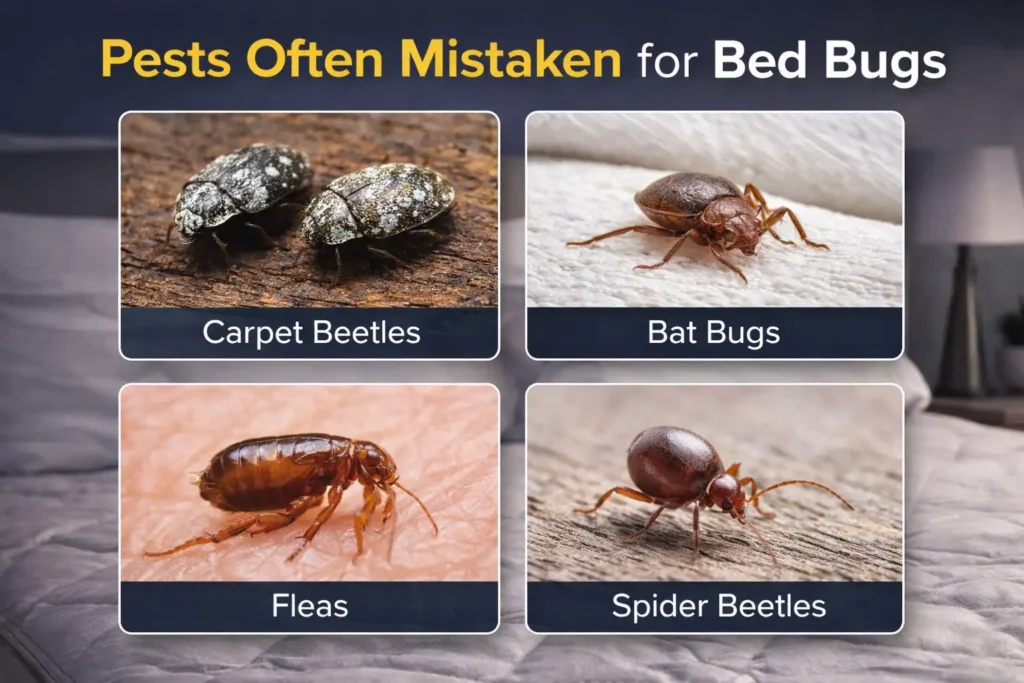
Because many insects resemble bed bugs, misidentification is common in condos, apartments, and townhomes.
- Carpet Beetles
Their larvae cause skin irritation that looks like bites. They are rounder and more colourful than bed bugs.
- Booklice
Tiny, pale insects found in humid areas. They are harmless and do not bite.
- Fleas
Much smaller and capable of jumping. Often introduced by pets or wildlife.
- Cockroach Nymphs
Move quickly and have a more cylindrical shape.
If you are unsure whether the pest you found is dangerous, our guide on common pests found in Toronto homes can help you compare different insects and avoid unnecessary worry.
Are Bites a Reliable Way to Confirm Bed Bugs?
Not really. Although bed bug bites commonly appear in small groups or clusters, reactions vary widely. Some people show no marks at all, while others develop strong rashes.
Since bites can be caused by mosquitoes, fleas or even dry skin, physical evidence is always more reliable. If you want practical steps to reduce bite anxiety during inspections, our article on how to keep your Toronto home bed bug-free offers simple preventive tips.
Common Myths About Bed Bugs
- Myth: Bed bugs only live in dirty homes. They are found in clean homes, luxury condos and hotels alike, because they travel on people and belongings.
- Myth: Bed bugs only live in beds. They also hide in sofas, dressers, baseboards, outlets and behind picture frames.
- Myth: Bed bugs fly or jump. They can only crawl, which is why they rely on luggage, furniture and clothing to travel.
- Myth: A store-bought spray will solve it. Sprays rarely reach hidden bugs or eggs and often spread the problem to other rooms.
- Myth: Bed bugs spread disease. They are not known to transmit disease, but their bites, stress and lost sleep still take a real toll.
How to Inspect Your Bedroom Properly
A structured inspection increases your chances of finding clear evidence.
Step 1: Check the Mattress
Lift corners and inspect seams, folds, and buttons using a flashlight.
Step 2: Examine the Bed Frame
Look inside cracks and along joints. Pay close attention to screw holes and wooden slats.
Step 3: Inspect Nearby Furniture
Remove drawers and check the hidden edges of nightstands and dressers.
Step 4: Review Walls and Hanging Items
Examine behind frames, electrical plates and loose wallpaper.
For guidance that mirrors professional procedures, you can follow our step-by-step bed bug treatment guide for Toronto homes, which outlines how technicians search for activity.
Why Early Detection Matters
Catching bed bugs early keeps the problem limited to one or two rooms, which makes treatment faster, simpler and less expensive. Once bed bugs spread to sofas, closets or neighbouring units, treatment becomes larger and the risk of re-infestation goes up. See our guide on bed bug treatment costs in Toronto to understand how much early action can save.
The emotional side of bed bugs
Bed bugs affect more than skin. Many people lose sleep, feel anxious at night or feel embarrassed to tell friends and family. Knowing the facts, confirming the problem and getting a clear treatment plan are the best ways to regain peace of mind quickly.
When to Call a Professional
If you see multiple signs such as eggs, shed skins or live insects, it is time to call a licensed exterminator. Infestations spread quickly in condos and multi-unit buildings throughout Midtown, Scarborough and Downtown Toronto.
At Bugs Heat Terminator, we specialize in heat treatment that reaches deep into mattresses, furniture, and wall voids. It removes bed bugs in one visit for most homes and is one of the most trusted methods in the GTA.
For more details on why this method works so well, visit our page on bed bug heat treatment in Toronto, which explains the process and long-term benefits.
Frequently Asked Questions
How can I confirm the bug I found is a bed bug?
Compare it to the key features: flat, oval, wingless, reddish brown and about the size of an apple seed. If you are still unsure, keep it in a sealed bag or take a clear photo and ask a professional to identify it.
Can I rely on bites alone to know I have bed bugs?
No, because bites can come from mosquitoes, fleas or skin reactions, and some people do not react to bed bug bites at all. Physical evidence like live bugs, shed skins or dark spots on the mattress is far more reliable.
Which pests are most often confused with bed bugs?
Carpet beetles, booklice, fleas and cockroach nymphs are the most common look-alikes. Shape, colour and how fast the insect moves usually tell them apart.
When should I call a professional?
Call as soon as you find live bugs, eggs, shed skins or dark spots on bedding. The earlier treatment starts, the smaller and less expensive it is.
Conclusion
Knowing what bed bugs look like, where they hide and which signs to trust is the best way to avoid both panic and a growing infestation. If you find live bugs, eggs, shed skins or dark spots, act quickly, because early treatment is easier and more affordable. A professional inspection gives you a clear answer and a plan in a single visit. Learn more about our bed bug heat treatment in Toronto or call (647) 210-8852.
